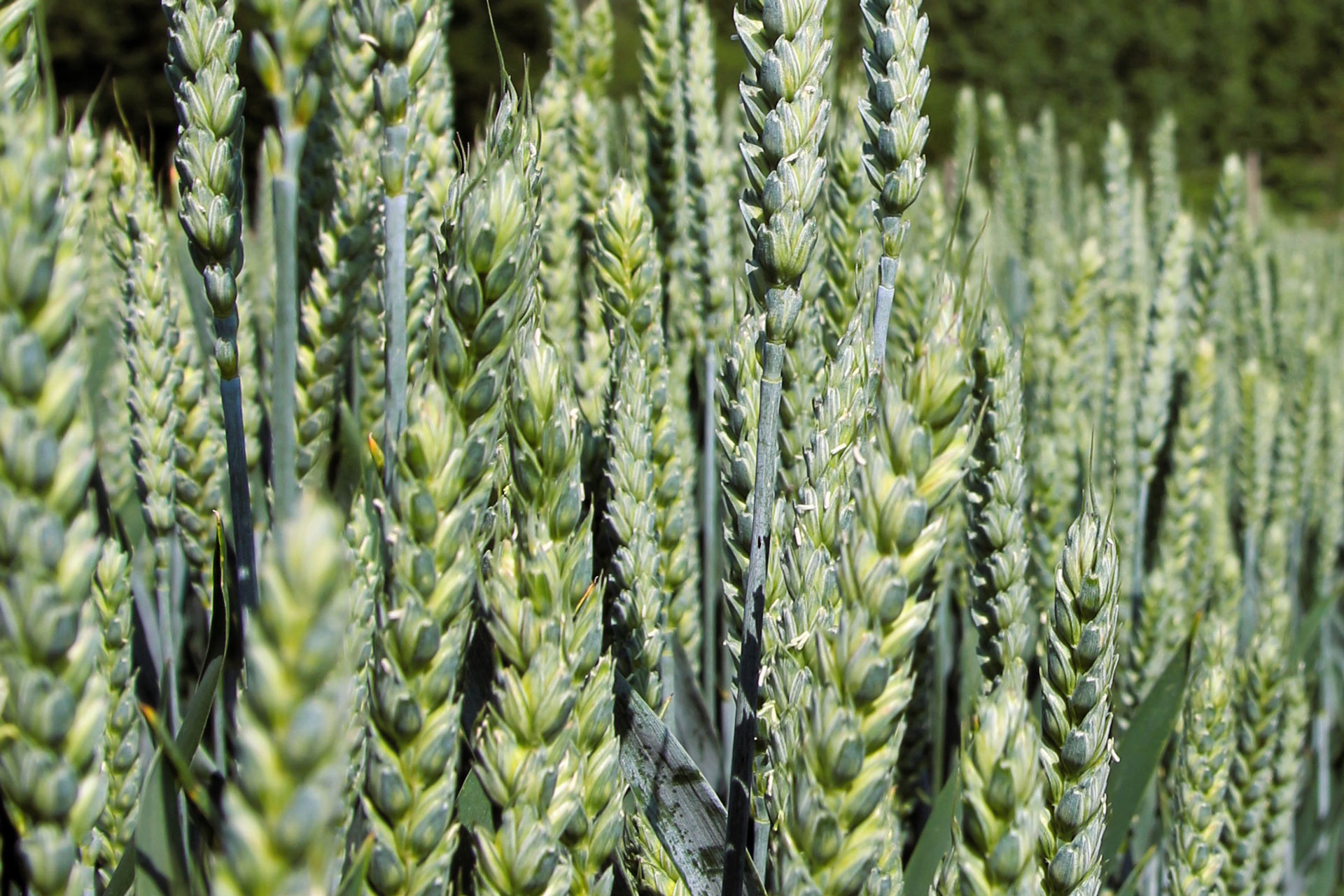
…but at least no one had to farm during it.
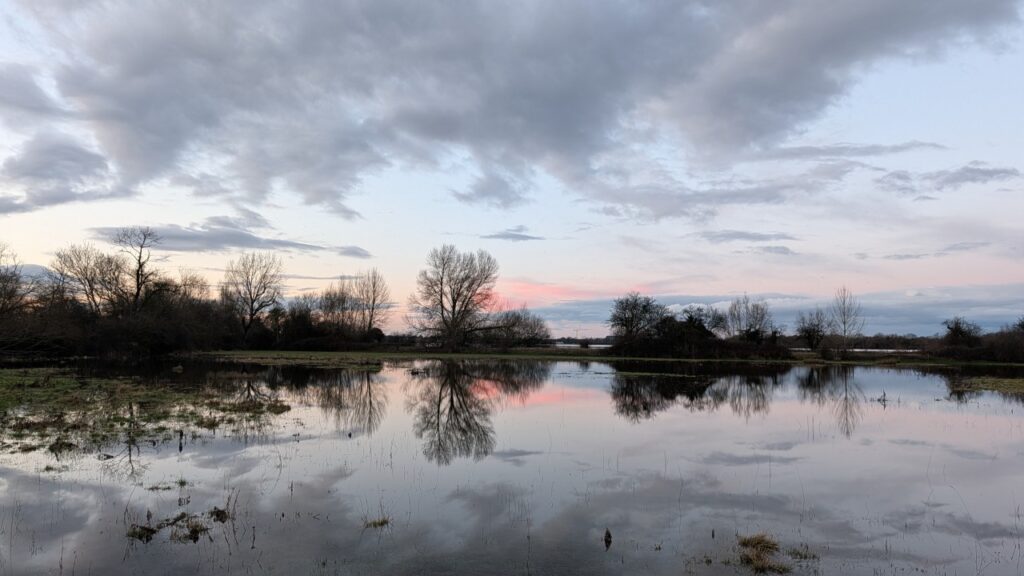
In the UK we’re leaving a winter so wet that parts of the country experienced 40 days of continuous rain1. Biblical-length downpours are noteworthy because they are part of a wider pattern. One that stretches back into the depths of time when rains changed life on Earth forever. And looking ahead, sets enormous pressure on how we will live, grow, and eat in the future.
So what’s the big deal, it’s just rain, right?
233 million years ago
The Carnian Pluvial Event was probably the most dramatic period of continuous rainfall ever.
This was a period when the climate changed. Dramatically.
Our best picture for what happened here is that volcanoes flooded the atmosphere with carbon dioxide. The gas did what is always does, it trapped extra solar energy in the atmosphere. This trapped energy needed a release valve, which came from warming up the oceans. This accelerated the water cycle – more evaporation leading to thunderous rains. Stable arid ecosystems turned into perennial monsoons that lasted for generations2.
Some life did well out of this event by adapting to the new niches it created. The dinosaurs would radiate and come to dominate this new era. The shift in ocean chemistry also gave rise to a new carbonate cycle and the world’s first coral reefs.
But for the life that lived before the rains, it was a disaster. Widespread acidification and anoxia drove a third of marine genera extinct. This included the coiled-shelled ammonites, the feathery starfish crinoids, and mysterious toothy conodonts. This is why this period is sometimes called the lost extinction event.
Unlike the five great mass extinctions, marked by severe >75% losses in biodiversity, this event was more of a shift. A great dying and replacement rolled into one. Endless rains, for generations, driving the Earth into a new regime.
Luckily for us, our civilization didn’t exist at the time. Whatever system of food production we would have relied on prior to this event would have broken. But this scenario of climate change, atypical rain, and the systemic change is one that is unnervingly familiar.
2,186 harvests ago
“Plant wheat in soil that is dry, free from weeds, and sunny […] winter wheat should be sown on high, open ground, where the sun shines longest.” – Cato the Elder, 160 BC3.
The challenges of rain are not new to farming. Crops need the right amount of rain at the right time. As you move outside these bounds, problems happen. This is an understanding that has been embedded in agrarian societies.
As an example, one of the oldest Roman festivals was the Robigalia. This festival appealed to the god of crop diseases specialising in wheat rust and mildew. This may sound like a niche god, but the Romans knew that the risk of harvest loss was existential. So just when the wheat is most susceptible to fungus, the Romans would mark the occasion:
“the Feast of Robigalia, which is now kept on April 25, because that is about the time when the crops are liable to be attacked by mildew.” – Pliny the Elder, late AD 70s4.
But Romans didn’t stop at festivals and prayers. They also built an understanding of agronomy and managed their farmlands. Cato’s farming handbook ‘De Agri Cultura’ is the oldest surviving Latin prose5. His advice about wheat is still sound 2,000 years later.
Rainfall is much more than just a wheat problem. Viticulture is a striking example where changing climates are already creating new winners and losers.
Soon after Cato’s day, winemaking began to spread across the South of France along Roman roads. You can still walk on a section of the Via Domitia in the city of Narbonne today. Viticulture grew to prominence in places like the Languedoc through these ancient connections.
But today the vines are under new pressures. The winters are both too wet, encouraging pests, and the summers are too dry. Even old vines, with several metre-deep roots, now need irrigation to fuel photosynthesis.
Meanwhile other growers are taking advantage of the shifting climate. Today the UK wine industry is worth £14B; last year production grew 55%6. The Languedoc and the South Downs are two sides of the same shift.
Today
We arrive at today’s soggy Oxford fields. Certainly enough to bother Cato, not enough to give us dinosaurs, probably.
We’ve seen these shifts first hand. Over the past few years Wild Bio has been running wheat field trials, and the weather data tells its own story.
2024 made history by becoming the warmest English spring in a record that stretches back to 1884. Then 2025 immediately broke that record with the new warmest spring ever. Despite both springs being unusually warm, the rainfall varied dramatically between them. Spring 2024 was the 5th wettest on record, while 2025 was the 2nd driest on record and driest since 18937.
But the problem isn’t just the quantity of rain, it’s the timing.
Figure 1 shows a field site’s cumulative rainfall in 2025 versus its trailing five year average.
Figure 1: Rainfall during the 2025 winter wheat growth season vs historic data at one of our trial sites. The shaded band shows the 95% confidence interval for the trailing five years.
The series begins 1st of February. This is when the wheat was starting to wake up after the winter. During this period, 2025 rainfall was a little low, but similar to previous years.
The first big change happened in March when the wheat was trying to grow new leaves and tillers. In 2025 we saw long stretches of no rain, punctuated by short, sharp downfalls. This step-function contrasts the more regular water supply of previous years. This water stress isn’t ideal, but wheat is a flexible plant and can recover later. If the rains do eventually come…
From mid-June onwards the wheat reached a critical stage. The switch from vegetative to reproductive stages – flowering (anthesis) and grain filling. Water stress here can have the biggest impact on yield. 2025 saw unusually limited rainfall at this critical stage. The rains did start again in late July. But by this stage grain filling was complete and the wheat needed to dry down ready for harvesting. So these late rains were a nuisance rather than a help.
So pretty much throughout the season we had rain where we didn’t want it and no rain where we did want it. An unhappy inversion of historic norms. This season demanded water use efficiency – the ability to do more with less, at the right moment.
The future
We’re in the business of developing resilient crops, so years like 2025 are instructive. But they also recalibrate our timeline. We’re not working against a future climate projection, we’re meeting the problem that’s already here. Water use efficiency isn’t a future trait to breed for, we need it now.
It should not be controversial to say we’re already in a period of climate change. Growers aren’t debating it, they are getting on with adapting to it. The impact of these climate shifts cost UK farmers an estimated £800M last year in lost yield8.
And while the Earth has been through these seismic changes before, farming hasn’t. We need to get farmers the tools to adapt, faster than ever before.
For those who celebrate this April, happy Robigalia.
- “How much rain have we had so far?” by the Met office. 2026. ↩︎
- “Otherlands: A World in the Making” by Thomas Halliday. 2022. ↩︎
- “De agri cultura” by Cato the Elder. 160 BC. ↩︎
- “Natural History, Book XVIII” by Pliny the Elder. AD ~70. ↩︎
- “De agri cultura” by Cato the Elder. 160 BC. ↩︎
- “UK wine production soars in 2025, new data from the Food Standards Agency shows.” by the Food Standards Agency. 2026. ↩︎
- Data available from the MET regional and UK series website ↩︎
- “Estimated financial losses faced by UK farmers due dry weather impacts on key arable crops” by the Energy & Climate Intelligence Unit. 2025. ↩︎